A wildlife world inside a volcano
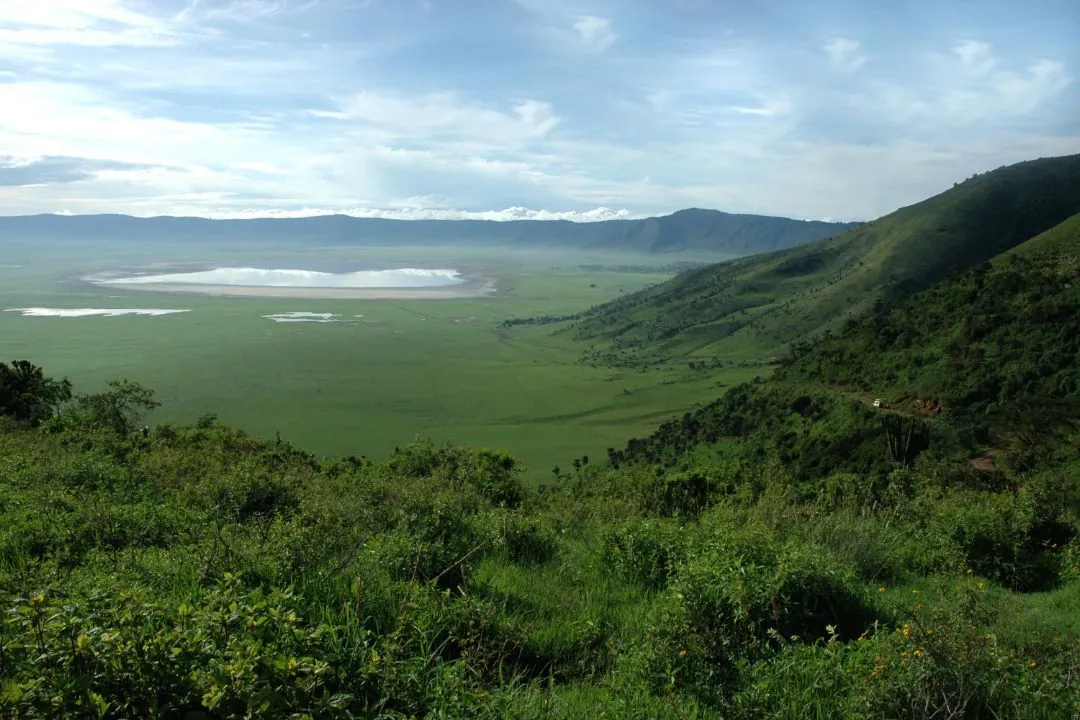
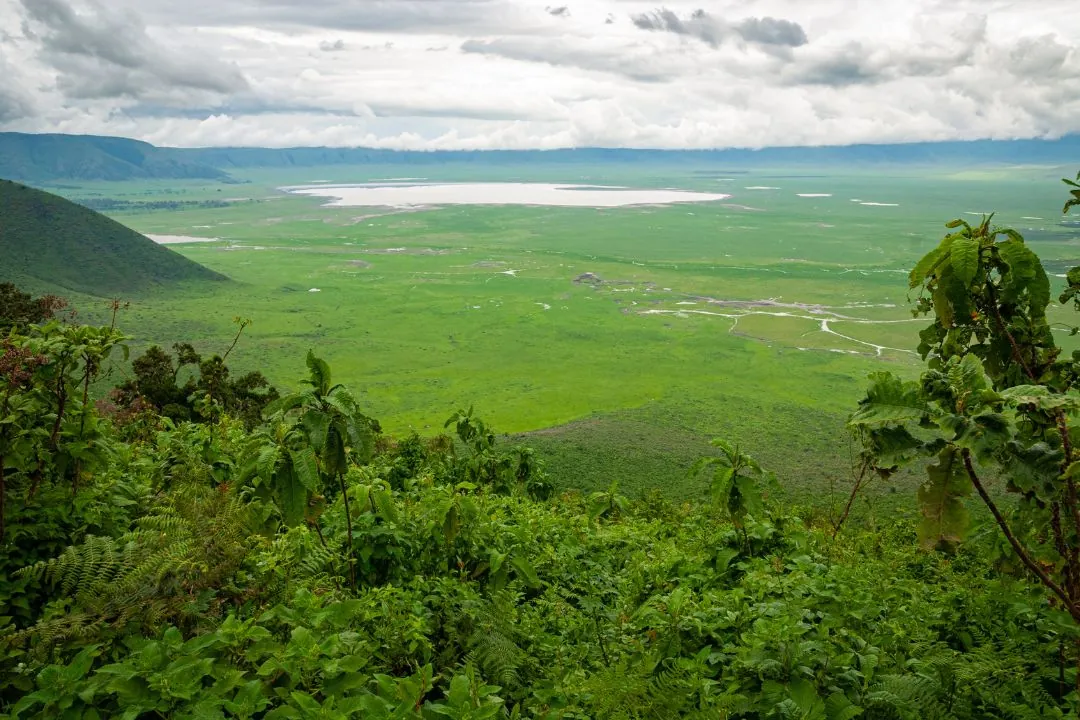
Imagine a volcano so large that, when it collapsed two to three million years ago, it left a bowl around 16 to 19 kilometres across, with walls rising up to about 600 metres. Now fill that bowl with grassland, a soda lake, freshwater springs, swamps and a small forest, and add tens of thousands of animals that can live there all year round. That is the Ngorongoro Crater, the world’s largest unbroken, unflooded volcanic caldera, and one of the most extraordinary places to see wildlife on Earth.
The crater is the centrepiece of the Ngorongoro Conservation Area, which covers 8,292 square kilometres of highlands, plains, forests and craters between Lake Manyara and the Serengeti. It was separated from the Serengeti in 1959 to create a new kind of protected area, one where wildlife conservation, tourism and the traditional way of life of the Maasai people exist side by side. In 1979 it became a UNESCO World Heritage Site, recognised both for its natural wonders and, later, for its cultural importance, including the fossil sites of Olduvai Gorge and Laetoli.
For most travellers, a day on the crater floor is the highlight of their northern Tanzania safari. Within a few hours you can see lions, elephants, buffaloes, hyenas, hippos, flamingos and, if you are lucky, one of the critically endangered black rhinos that the crater is famous for. Because the animals have no reason to leave, sightings are reliable in every season, which makes the crater a perfect partner to the Serengeti, where wildlife moves with the rains.
Ngorongoro at a glance
- Conservation area: 8,292 km², established in 1959 and managed by the Ngorongoro Conservation Area Authority.
- The crater: a caldera about 16–19 km across, with a floor of roughly 260 km² and walls of 400–610 m.
- UNESCO: World Heritage Site since 1979.
- Location: about 180 km west of Arusha, between Karatu and the Serengeti.
- Altitude: the rim lies at around 2,200–2,300 m, so nights are cool all year.
- Known for: black rhino, big-maned lions, flamingos on Lake Magadi, Olduvai Gorge and the Maasai.
The crater floor: what you will see
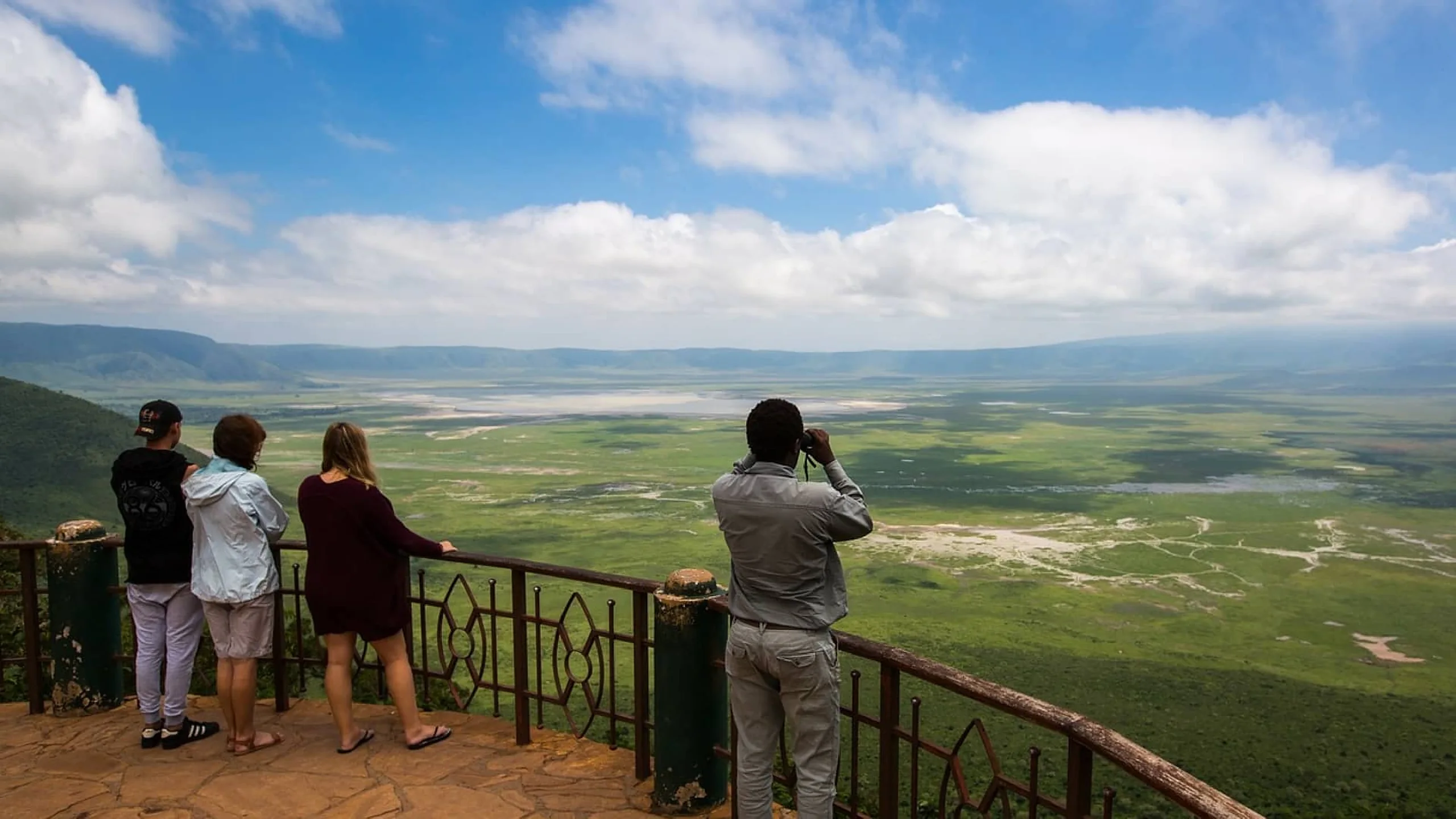
Descending the steep road from the rim, you watch the floor open up below you like a map: the shining surface of Lake Magadi, the green of the Lerai Forest, the swamps of Mandusi and Gorigor, and the open grasslands where most of the animals graze. Each habitat holds different wildlife, and a good guide will move between them during the day.
Black rhino
The Ngorongoro Crater is the best place in northern Tanzania, and one of the best in East Africa, to see the critically endangered eastern black rhinoceros. The crater’s small population is closely protected by rangers, and rhinos are often seen grazing on the open plains, usually at a distance. Bring binoculars and be patient: seeing one is never guaranteed, but your chances here are far higher than anywhere else on the northern circuit.
Lions and other predators
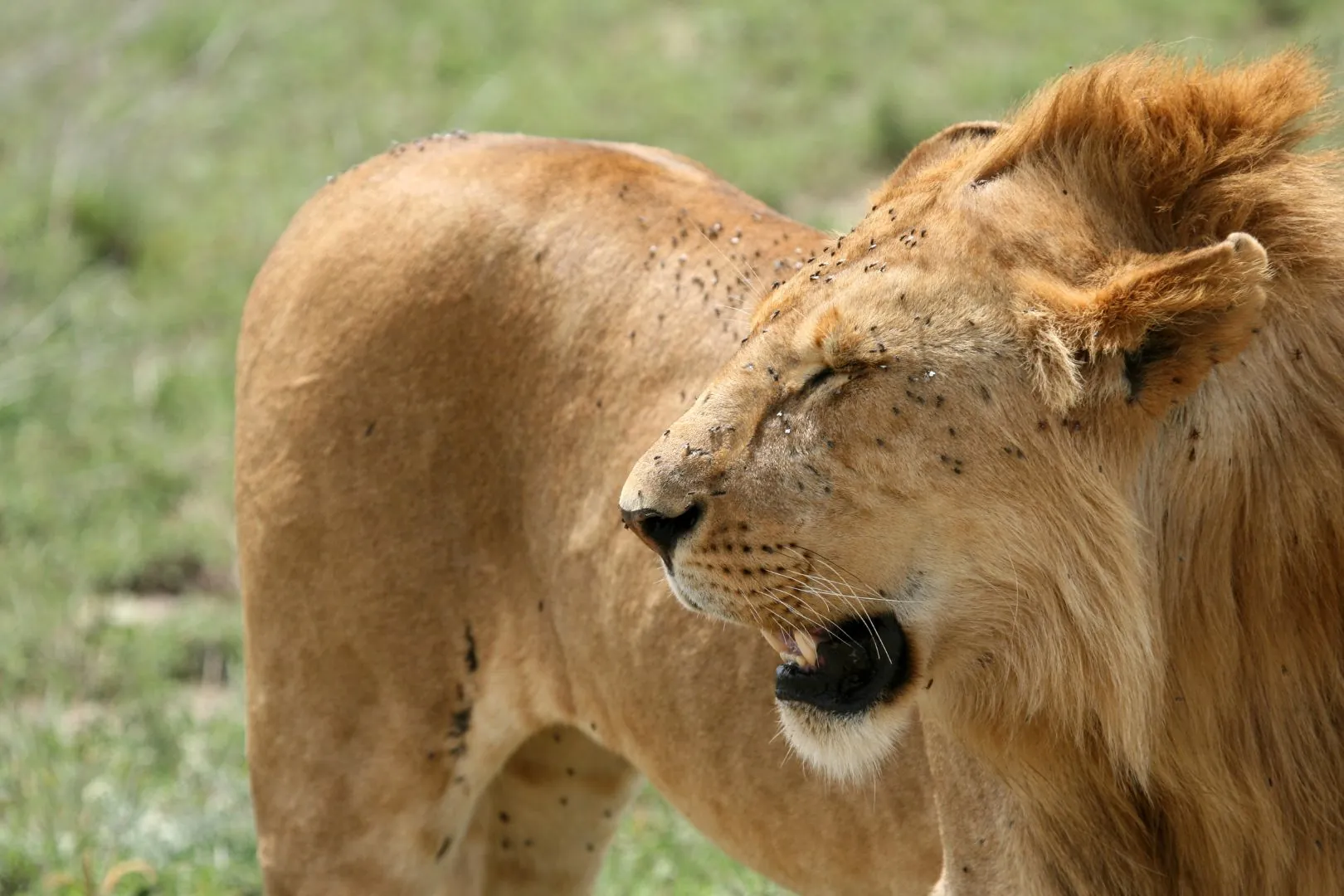
The crater is known for its lions, including impressive dark-maned males, and for its large population of spotted hyenas, which hunt as much as they scavenge here. Golden and black-backed jackals, servals and bat-eared foxes are also common. Cheetahs and leopards are seen less often; leopards prefer the forests of the crater walls and the rim.
Elephants, buffaloes and grazers
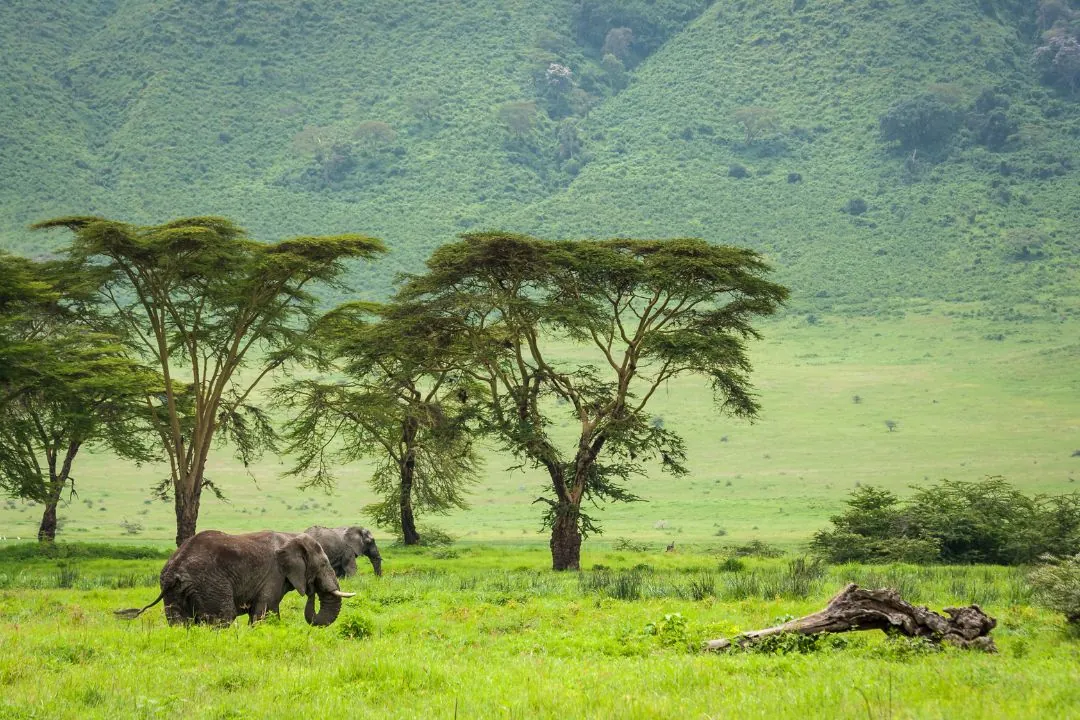
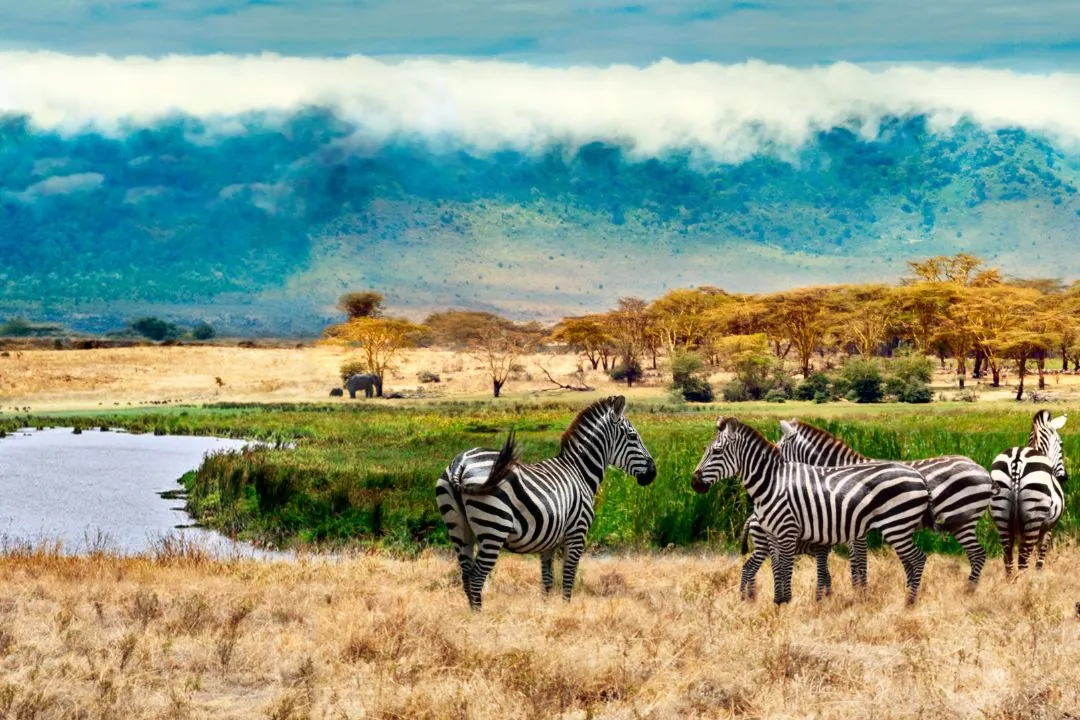
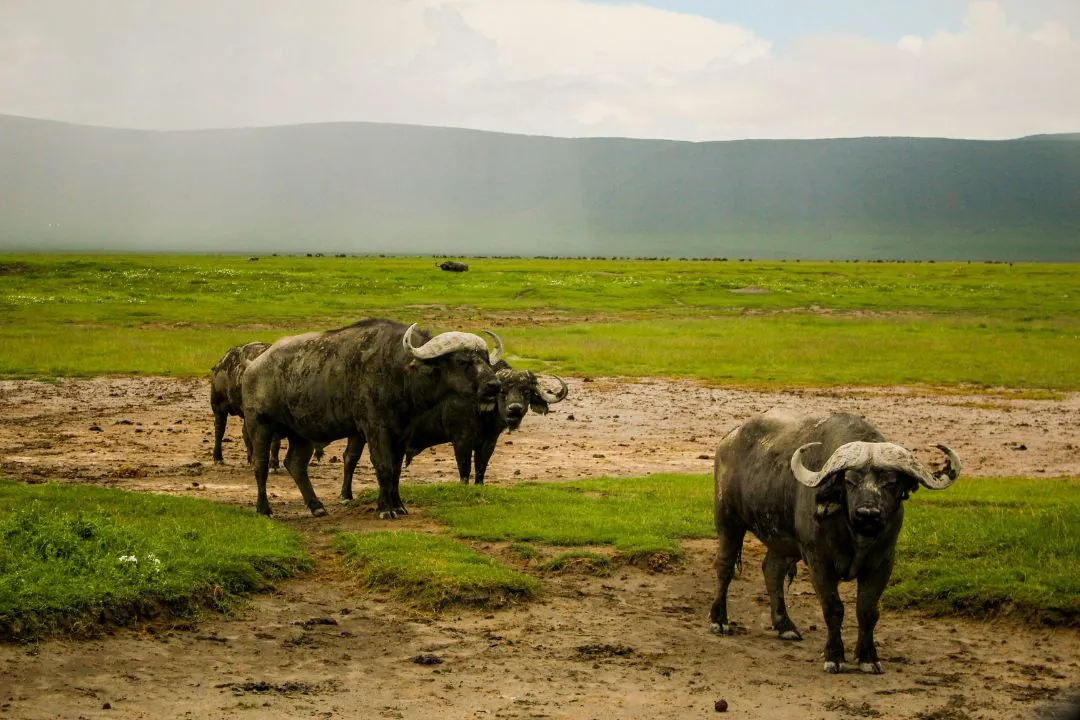
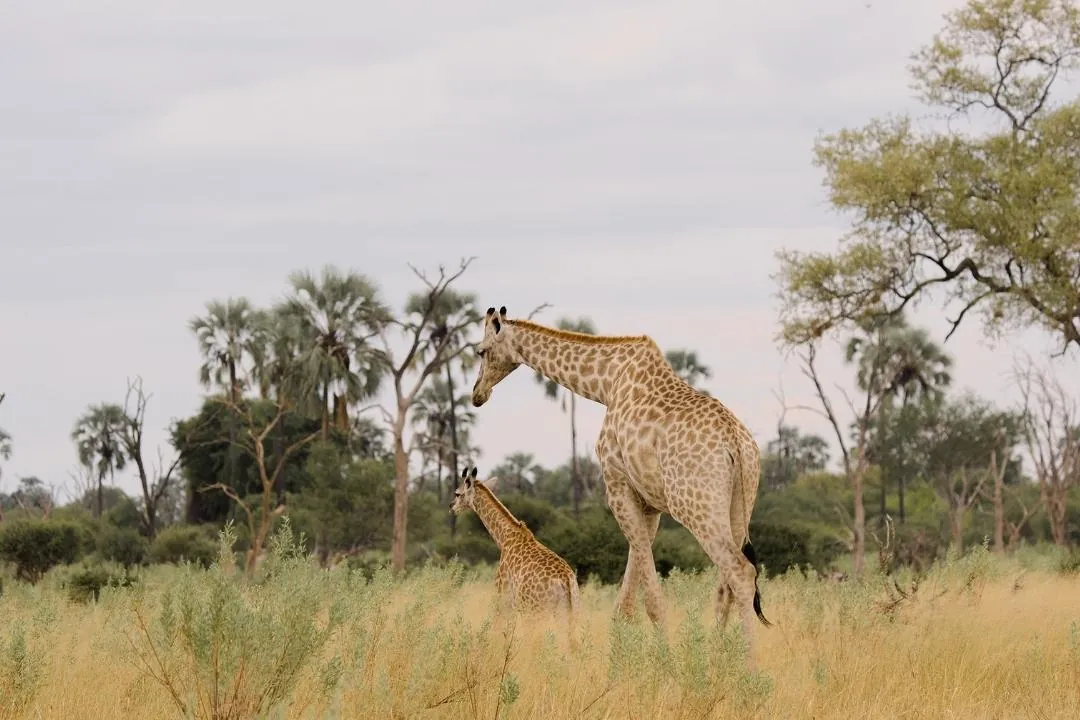
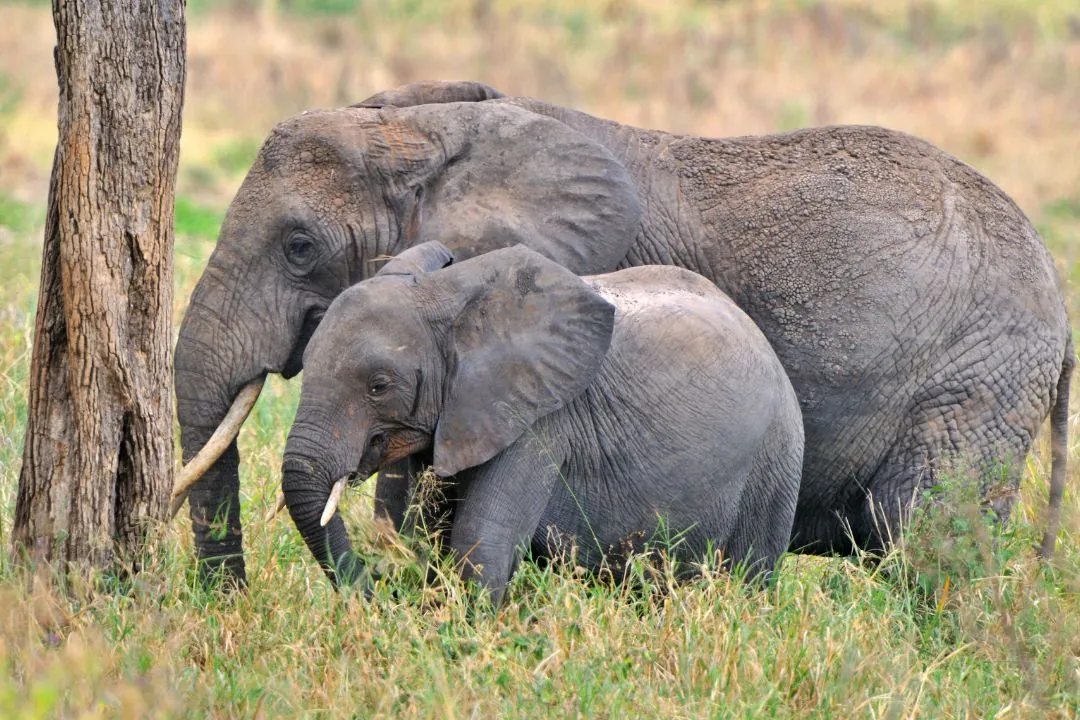
Old bull elephants with huge tusks are a famous sight in the crater, often feeding in the Lerai Forest or the swamps. Female elephants and their young generally stay in the forests of the highlands above. Large herds of buffaloes, zebras, wildebeest, Thomson’s and Grant’s gazelles, elands and warthogs graze the grasslands all year. Giraffes are absent from the crater floor, as they cannot easily descend the steep walls; you will see plenty of them in the highlands and on the plains around Olduvai and Ndutu.
Flamingos and birdlife
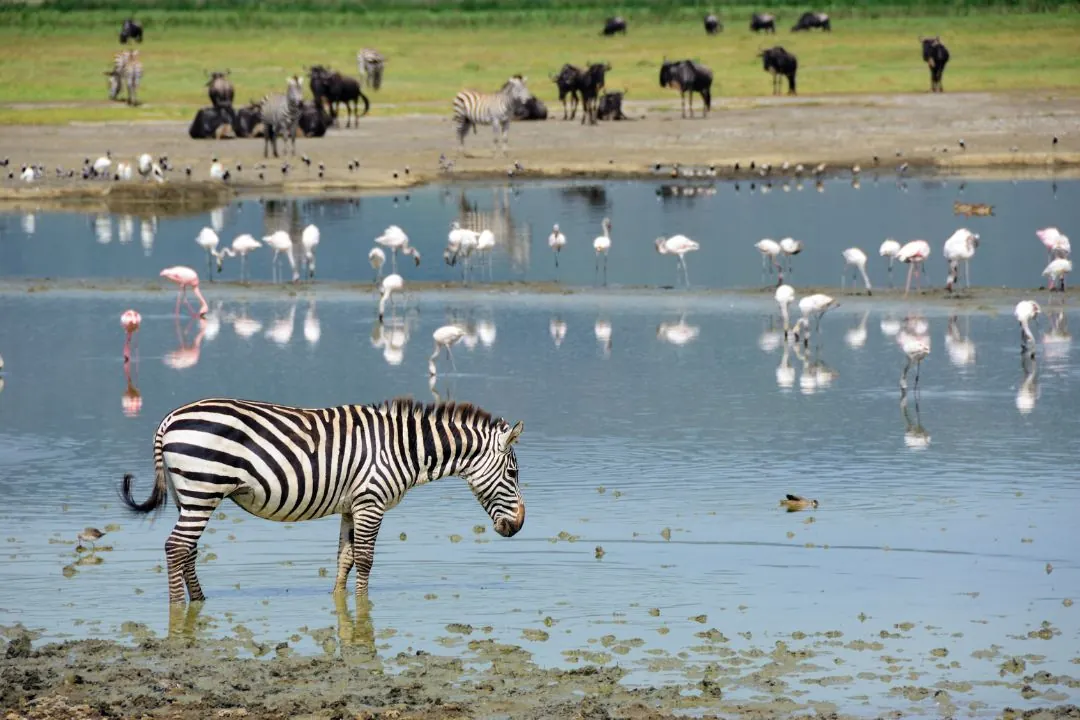
Lake Magadi, the shallow soda lake in the south-west of the crater, often hosts flocks of lesser and greater flamingos, especially in the wetter months. The swamps and the Ngoitokitok spring attract hippos, pelicans, herons, storks and grey-crowned cranes, and kori bustards and ostriches stride across the grassland. The conservation area as a whole has more than 500 bird species, from forest birds on the rim to raptors such as the Rüppell’s griffon vulture, which nests in the cliffs of the Olkarien Gorge.
A short history of Ngorongoro
People have lived in and around Ngorongoro for a very long time. The fossils of Olduvai and Laetoli show that early humans and their relatives walked these plains millions of years ago. In more recent centuries the highlands were home to hunter-gatherers, then to the Datoga pastoralists, and from around the 19th century to the Maasai, who still graze their cattle here today. The name “Ngorongoro” is often said to imitate the sound of cowbells, although its origin is debated.
In the early 20th century, under German colonial rule, two German brothers farmed on the crater floor, and traces of their buildings can still be seen. Hunting was later banned, and in 1951 the area became part of the original Serengeti National Park. Because the Maasai depended on the highlands for grazing, the government separated Ngorongoro from the Serengeti in 1959 and created the conservation area as a multiple land-use area, the first of its kind in Africa. Today it is managed by the Ngorongoro Conservation Area Authority, and its future, balancing a growing human population with wildlife and tourism, remains a subject of active discussion in Tanzania.
Beyond the crater: the wider conservation area
Most visitors only see the crater and the road through to the Serengeti, but the Ngorongoro Conservation Area is huge and full of rewarding places for those with an extra day or two.
Olduvai Gorge
Olduvai Gorge, a 14-kilometre-long ravine on the edge of the Serengeti plains, is one of the most important palaeoanthropological sites in the world. Discoveries made here by Mary and Louis Leakey, including the Paranthropus boisei skull known as “Zinj” and fossils of Homo habilis, changed our understanding of human evolution. A small museum at the gorge explains the finds, and it is an easy, worthwhile stop on the drive between the crater and the Serengeti. Nearby, at Laetoli, a trail of fossilised footprints about 3.6 million years old records some of our earliest upright-walking ancestors.
Ndutu and the southern plains
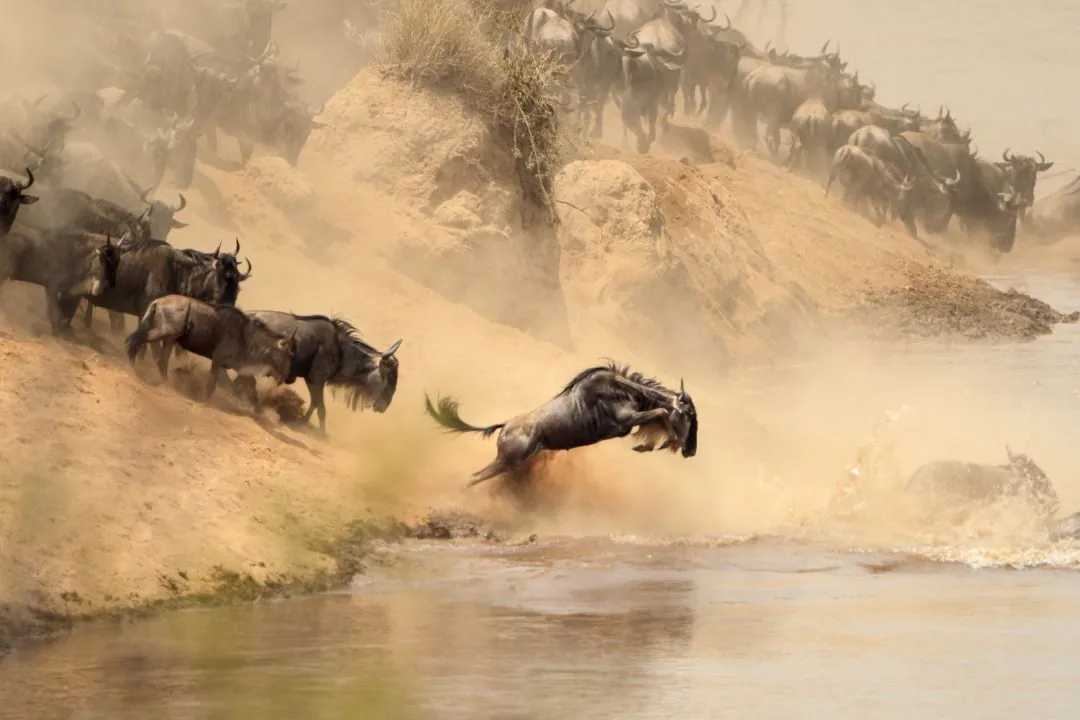
The Ndutu area, on the border with the southern Serengeti, is where the wildebeest migration gathers to give birth from about December to March. It lies inside the conservation area, where off-road driving is permitted in places, making it a superb area for predator sightings during the calving season. Read more about timing on our Serengeti page.
Empakaai and Olmoti craters
North of the main crater, the smaller Olmoti and Empakaai craters offer some of the best walking in northern Tanzania. Empakaai is noted for the deep soda lake that covers almost half of its floor, often pink with flamingos, and on clear days there are views of Ol Doinyo Lengai, the Maasai’s “Mountain of God” and the only active volcano in the world to erupt natrocarbonatite lava. These walks are made with an armed ranger, and buffaloes, bushbucks and blue monkeys are often seen on the way down.
The Maasai and the highlands
The Ngorongoro Conservation Area is home to tens of thousands of Maasai pastoralists, whose cattle graze alongside the wildlife on the highland slopes. Visits to a Maasai boma (homestead) can be arranged to learn about their customs, dances, homes and beadwork. We ask our guests to visit with respect and curiosity, and we choose communities where visits are welcome and benefit the village.
Best time to visit the Ngorongoro Crater
Because the crater’s animals are resident, game viewing is excellent all year. What changes with the seasons is the weather, the landscape and the number of other visitors.
- June to October (dry season): the most popular time, with clear skies, short grass and easy wildlife viewing. Mornings on the rim are cold, and the crater floor can be dusty and busy, so we start early.
- November to March: green landscapes and good wildlife, with short afternoon showers. From December to March this is also the time to combine the crater with the calving season at Ndutu.
- April and May (long rains): the quietest months, with lush scenery and fewer vehicles; roads can be muddy and some afternoons are wet.
Our homepage planner shows how each month suits a safari, a Kilimanjaro climb and Zanzibar, which is useful if you want to combine them.
How a crater day works
Game drives in the crater are made in your own 4x4 safari vehicle with your driver-guide. You descend early in the morning via one of the designated descent roads and come back up via the ascent road. Time on the crater floor is limited each day by the conservation authority, and the rules change from time to time; your guide will plan the day so you make the most of it. Most visitors take a picnic lunch, eaten at one of the designated picnic sites, such as the one beside the Ngoitokitok spring.
A few tips for a great crater day:
- Start early. Being among the first vehicles on the floor gives you the best light, active animals and fewer crowds.
- Bring a warm layer. The rim is around 2,300 m high and mornings can be close to freezing, while middays on the floor are warm.
- Watch your picnic. Black kites are expert thieves; eat inside the vehicle or keep food covered.
- Use binoculars. Rhinos are often seen at a distance, so good binoculars make a big difference.
Photography tips for the crater
The crater is a photographer’s dream, but its scale and light can be tricky. Some suggestions from our guides:
- Use the morning mist. In the cool months, mist often fills the crater at dawn and slowly lifts as you descend. Stop at the viewpoints on the rim for wide landscape shots before you go down.
- Bring a long lens. Rhinos, cheetahs and many birds are often some distance away. A lens of 300–400 mm, or a good bridge camera, is ideal; a beanbag helps steady it on the vehicle roof.
- Think about the background. The crater walls make a beautiful, simple backdrop. Position the vehicle so animals are framed against the walls rather than against other vehicles.
- Watch the dust. In the dry season fine volcanic dust gets everywhere. Keep your camera in a bag between sightings and avoid changing lenses in the wind.
- Look for flamingos in flight. Around Lake Magadi, flocks lifting off the water against the crater walls make one of the crater’s signature images.
Sample itinerary: two days around Ngorongoro
If you have a little more time, the conservation area rewards a slower pace. Here is one way we might plan two days, combined with a wider safari:
Day 1: Karatu highlands and the crater rim
Leave Arusha or Tarangire in the morning and drive up the Rift Valley escarpment past Lake Manyara to Karatu. After lunch at your lodge, take a walk through the coffee farms or visit a local market. In the late afternoon, drive up to the rim viewpoint for your first look into the crater as the light softens. Overnight in Karatu or on the rim.
Day 2: Crater floor and onward journey
Descend at first light and spend the morning exploring the crater floor: the plains for rhino and lions, Lake Magadi for flamingos, the Lerai Forest for old bull elephants, and the Ngoitokitok spring for hippos and a picnic. In the afternoon, either return to Karatu or continue towards Olduvai Gorge and the Serengeti.
With a third day, add a walk at Empakaai Crater or a cultural day at Lake Eyasi with the Hadzabe and Datoga peoples.
What to pack for Ngorongoro
Because of the altitude, Ngorongoro needs slightly different packing from the lower parks. Bring a warm fleece or down jacket, a hat and gloves for early mornings on the rim, a windproof layer for the open-roof vehicle, sunglasses and sunscreen for the bright crater floor, and a scarf or buff to keep the dust out of your nose and mouth in the dry season. Comfortable walking shoes are useful if you plan to walk at Empakaai or around your lodge.
How to get to the Ngorongoro Crater
The crater lies about 180 km west of Arusha. The drive takes around three to four hours on a good tarmac road through Mto wa Mbu and the farming town of Karatu, then climbs through the forest to Lodoare Gate and the crater rim. Many travellers visit on the way to or from the Serengeti; others stay in Karatu and visit the crater on a full day out. If you are short on time, our Ngorongoro Crater Day Trip from Arusha makes a long but unforgettable day. The nearest airstrip is at Lake Manyara, about 1.5 to 2 hours’ drive from the rim lodges.
Where to stay near the Ngorongoro Crater
There are two main choices, each with clear advantages.
On the crater rim
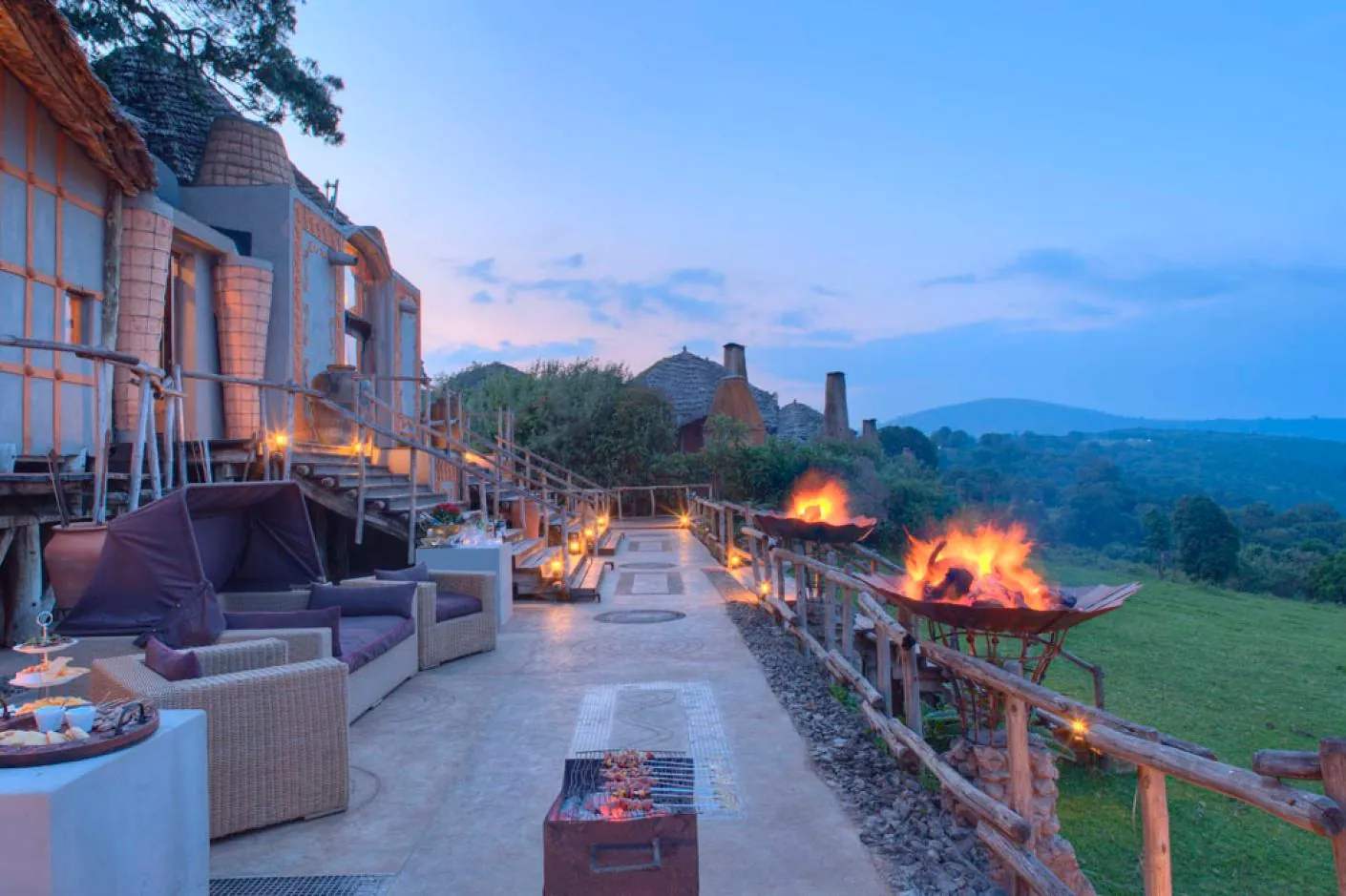
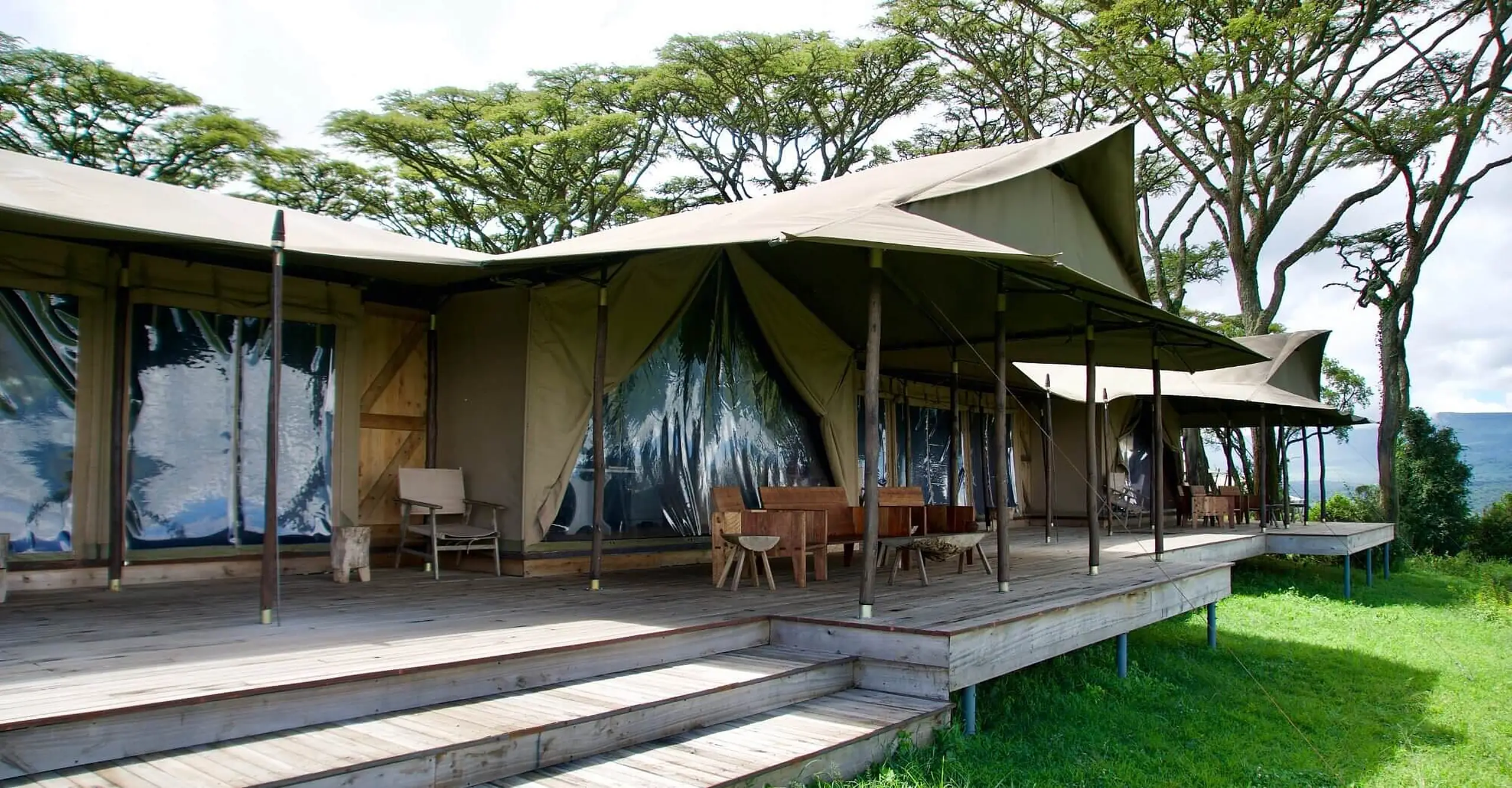
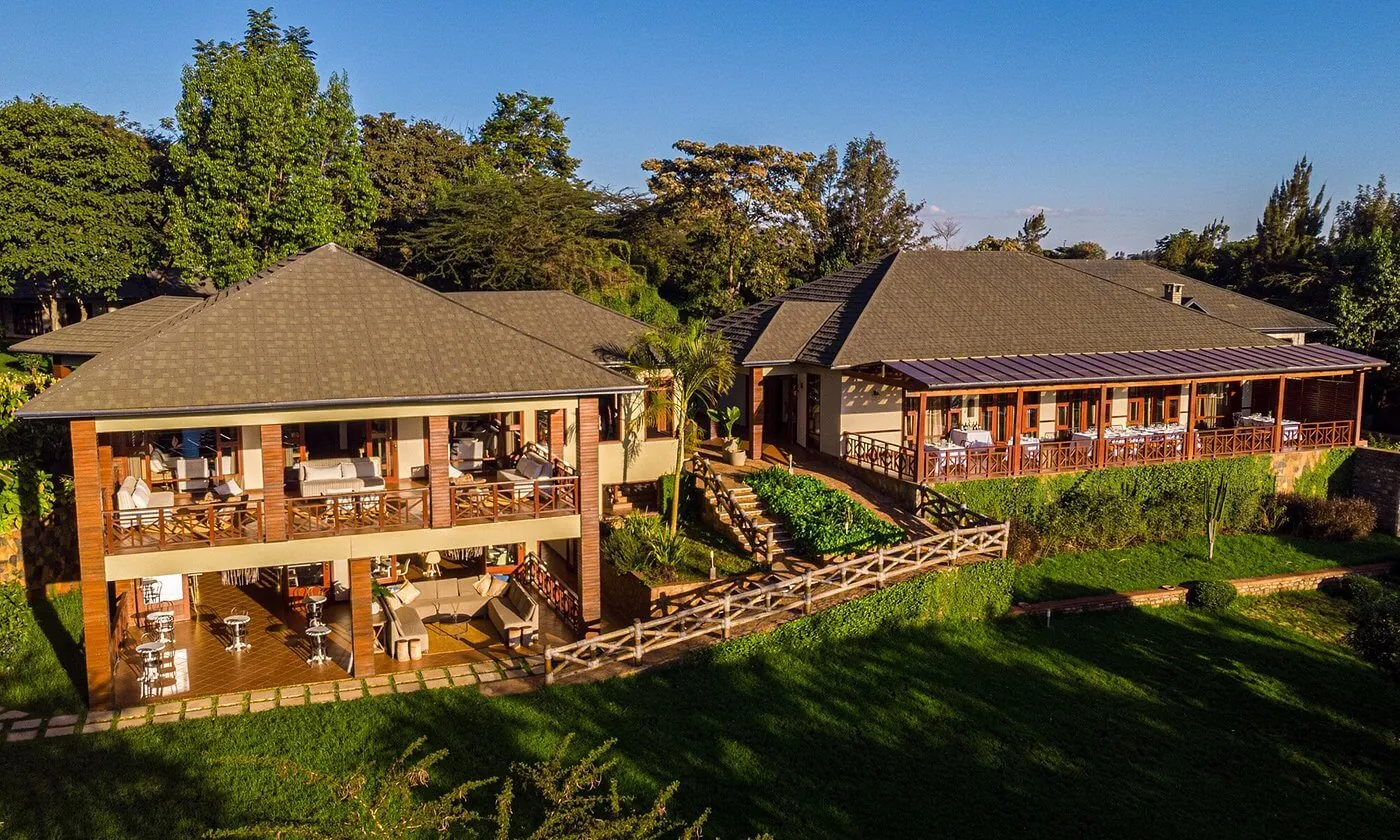
Staying on the rim means waking up to views straight down into the crater and being only minutes from the descent road, so you can be on the floor early. It is cooler and more atmospheric, and generally more expensive. Entamanu Ngorongoro sits on the quiet north-western rim with views of both the crater and the Serengeti. The famous andBeyond Ngorongoro Crater Lodge is closed for a rebuild and is due to reopen in 2027.
In Karatu and the highlands
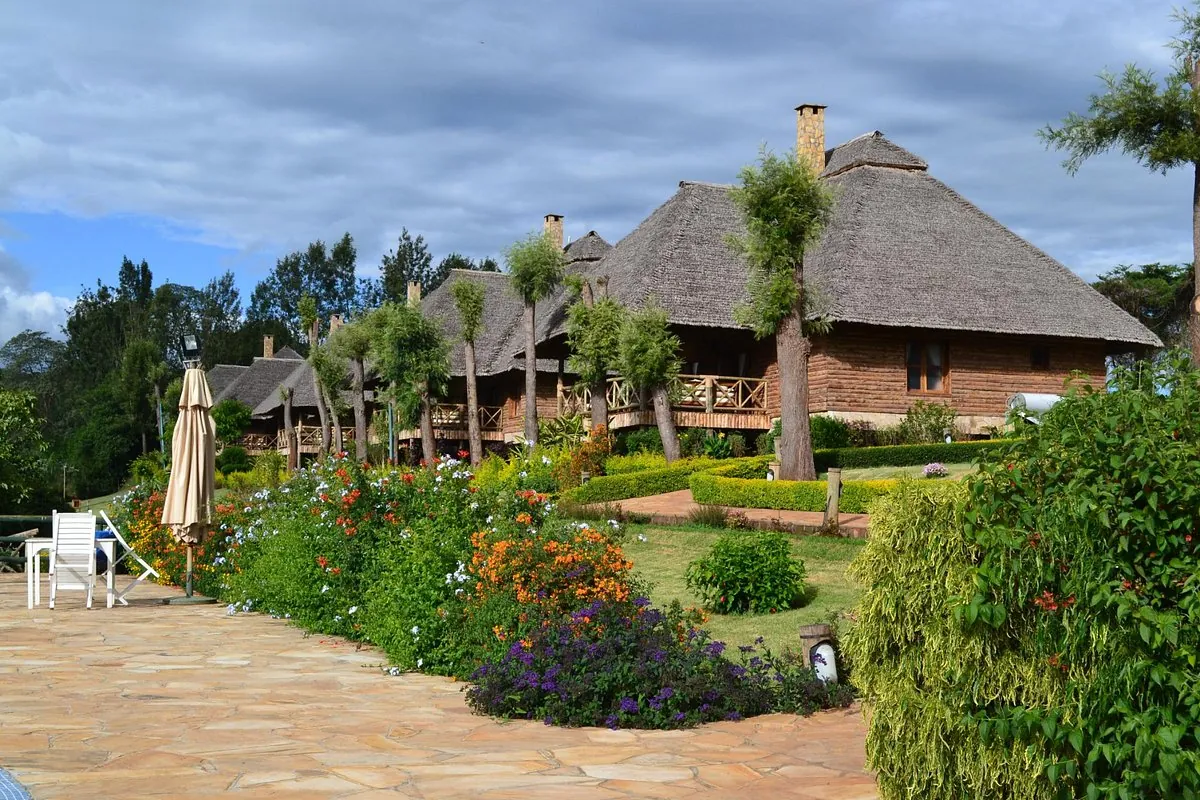
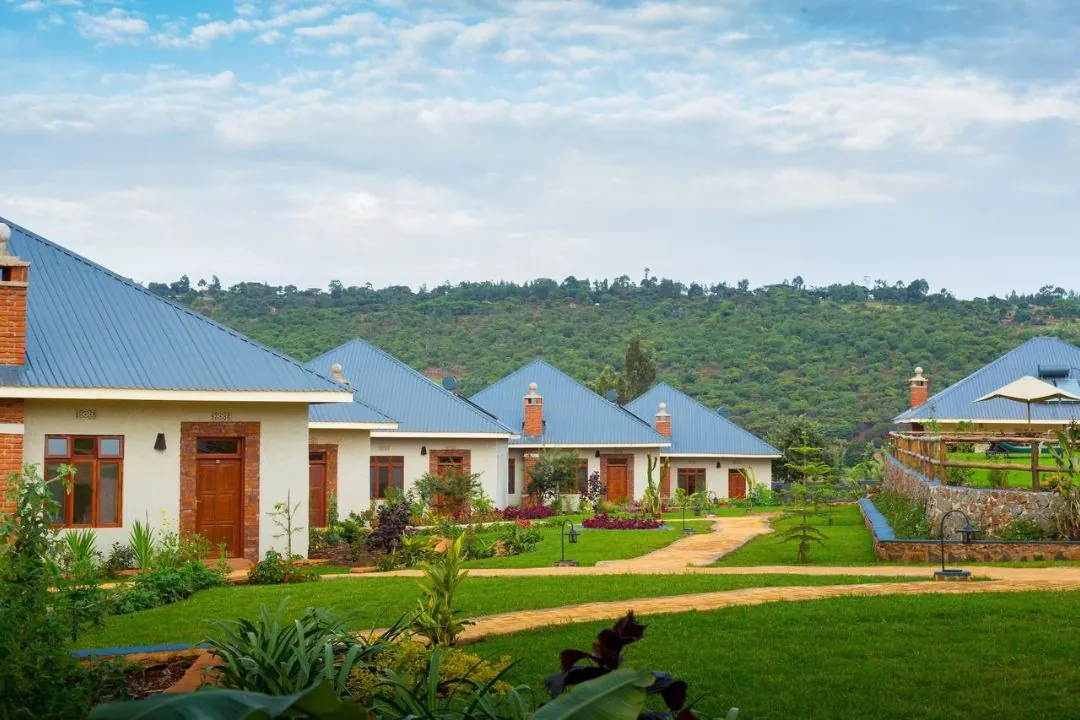
The green farming country around Karatu, 30 to 40 minutes from Lodoare Gate, is warmer, has a wider choice of lodges at every budget and is convenient for Lake Manyara and Lake Eyasi. Lodges here often sit on coffee farms with gardens and pools. Good choices include Ngorongoro Farm House, about 4 km from the gate, Neptune Ngorongoro Luxury Lodge, Marera Valley Lodge and the good-value Country Lodge Karatu.
See all the places we like to book on our Where you’ll stay page.
Safaris that include the Ngorongoro Crater
Almost every northern Tanzania safari includes the crater, because it fits so naturally between the other parks. Some of our itineraries:
- 3-Day Tanzania Wildlife Safari: Tarangire, the Ngorongoro Crater and Lake Manyara in a short trip.
- 4-Day Tanzania Wildlife Safari: the same parks at a more relaxed pace.
- 5-Day Wildebeest Migration Safari: the Serengeti and the crater together.
- 8-Day Northern Circuit Safari: the full circuit, including Lake Eyasi.
- Ngorongoro Crater Day Trip: a single, full day from Arusha.
Responsible travel in Ngorongoro
The conservation area is a shared landscape, and its future depends on balancing the needs of wildlife, local communities and tourism. You can help by following your guide’s instructions, keeping noise down near animals, never leaving litter, and asking before photographing people. When you visit Maasai communities, buying beadwork or crafts directly from the makers is a meaningful way to support local families.
Plan your Ngorongoro safari
Whether you want a single crater day, a combination with the Serengeti migration, or a slower trip with walks to Empakaai and a visit to Olduvai Gorge, we will plan it around you. Send us an enquiry with your dates and interests, and our team in Arusha will reply within 24 hours with ideas and a clear, no-obligation proposal.